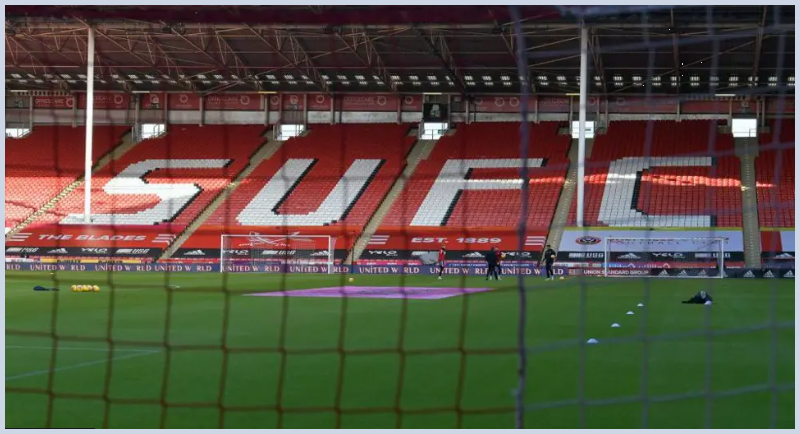
Sheffield United Ownership Saga: A Defining Test for the Independent Football Regulator
What began as a situation that might have seen Sheffield Wednesday become the inaugural test case for England's Independent Football Regulator (IFR) has shifted dramatically across the city to Bramall Lane, where Sheffield United now finds itself at the center of a high-stakes regulatory examination. The unfolding ownership crisis at the Championship club is poised to become the first serious assessment of the IFR's authority to evaluate the "honesty, integrity and financial soundness" of football club proprietors.
The Core Issue: A £35 Million Debt Dispute
The roots of Sheffield United's current predicament lie in a High Court ruling delivered last week, which saw COH Sports Bidco Limited (CSBL), the corporate vehicle used by current co-chairmen Steven Rosen and Helmy Eltoukhy to acquire the Blades two years ago, wound up with an outstanding liability of £35 million owed to former owners United World, led by Prince Abdullah. In a move that has raised eyebrows across English football, ownership of the club was transferred from CSBL to a new parent entity, 1919 Partners LLC, just two months prior to the liquidation.
This restructuring effectively severed the direct connection between CSBL and Sheffield United, leaving the substantial debt without an obvious link to the football club itself. The maneuver has sparked widespread speculation about the motives behind the transfer and whether it was designed to insulate the club from financial obligations to United World.
EFL Sanctions: The 12-Point Penalty Threat
The English Football League (EFL) has confirmed it will "consider the implications" of recent developments and weigh up "whether any further action is required." Under Regulation 12.3, the EFL retains the authority to treat an insolvency event affecting any company financially connected to a club as grounds for sporting sanctions. The precedent was set in 2009 when Southampton were docked the mandatory 10 points after their parent company, Southampton Leisure Holdings, entered administration despite the club's attempts to argue it was a separate entity.
If the EFL board determines that CSBL was financially intertwined with Sheffield United, the Blades could face a 12-point deduction for the current season, a potentially devastating blow to their Championship campaign. Appendix 3, Clause 10 of EFL regulations further requires clubs to provide at least 10 days' advance notice of any planned ownership transfer, a requirement BBC Sport understands was not fulfilled in this instance.
IFR's First Major Test
While the IFR has previously issued a warning notice to Morecambe in the National League North for failing to respond to queries, the Sheffield United situation represents an entirely different magnitude of regulatory challenge. For the first time, the regulator has the opportunity to scrutinize the conduct of Championship-level owners and potentially impose meaningful sanctions.
The Football Governance Act, which established the IFR, prohibits anyone from becoming a club owner or director without first submitting an application and receiving approval confirming their suitability. BBC Sport has learned that neither the IFR nor the EFL were informed by Sheffield United about the ownership restructuring or the addition of Timothy Ryan to the board. This raises questions not only about the unpaid debt but also about compliance with regulatory approval processes and the transparency of asset transfers.
The IFR possesses several enforcement tools, including the power to issue censure statements, impose fines, or appoint a "skilled person" to oversee club operations in place of the current owners. Although the regulator's ability to revoke or suspend ownership licenses does not take effect until the 2027-28 season, the current case will set crucial precedents for how the IFR exercises its existing authority.
Club Silence and Fan Frustration
Sheffield United has attempted to distance itself from the controversy, issuing a statement describing the situation as "a matter between the current owners and former owner" following CSBL's liquidation. The club has not responded to subsequent requests for comment, leaving supporters and stakeholders in the dark about critical details.
James Kemp, better known as "Blade on a Bike" for his charitable fundraising efforts, expressed disbelief at the club's approach. "Do they think they can just change company names to avoid paying what they owe the previous owner?" Kemp told BBC Sport. "It's just not the way to go about business. So, in my view, I think there will be sanctions."
The Blades Fan Advisory Board, which maintains regular communication channels with ownership, has formally requested information about the "transfer of ownership to 1919 Partners, the financial obligations they hold, EFL involvement in these issues and a request for wider communication with supporters.’’
On-Field Impact: Squad Depletion and Transfer Constraints
The financial uncertainty has already begun to affect Sheffield United's football operations. With parachute payments from Premier League relegation having expired at the end of last season, the club has tightened its belt significantly in the transfer market. The Blades have sold two of their most influential players, Andre Brooks and Gustavo Hamer, leaving manager Chris Wilder to navigate the remainder of the summer window primarily through the loan and free agent market.
Wilder, addressing the off-field distractions, pledged to "dig in" amid the turmoil but declined to comment extensively on the ownership dispute, respecting the club's decision to issue a statement. The team managed a gritty 0-0 draw at Swansea City last weekend, putting the financial worries aside to earn their first points of the season.
Key Questions for the Regulator
The IFR now faces several critical determinations that will shape its credibility and effectiveness:
- How will the regulator view the transfer from CSBL to 1919 Partners?
- What was the process and motive behind the restructuring?
- What were the financial terms that facilitated the transfer?
- Why did the £35 million debt not remain attached to the football club?
- Will this debt ultimately be paid to United World?
Rosen and Eltoukhy have not denied the existence of the unpaid £35 million obligation, and the High Court hearing that resulted in CSBL's liquidation lasted a mere 10 seconds before the order was granted.
Broader Context: A League-Wide Ownership Crisis
Sheffield United's situation is symptomatic of wider financial instability across the EFL, where numerous clubs have struggled under problematic ownership structures. This pattern of dysfunction was a primary catalyst for the creation of the IFR, designed to provide independent oversight and protect clubs from irresponsible proprietors.
With many eyes across English football now fixed on Bramall Lane, the regulator's response will send a powerful signal about its willingness to enforce accountability at the highest levels of the game.


💬 Comments (0)
No comments yet. Be the first!
Leave a Comment