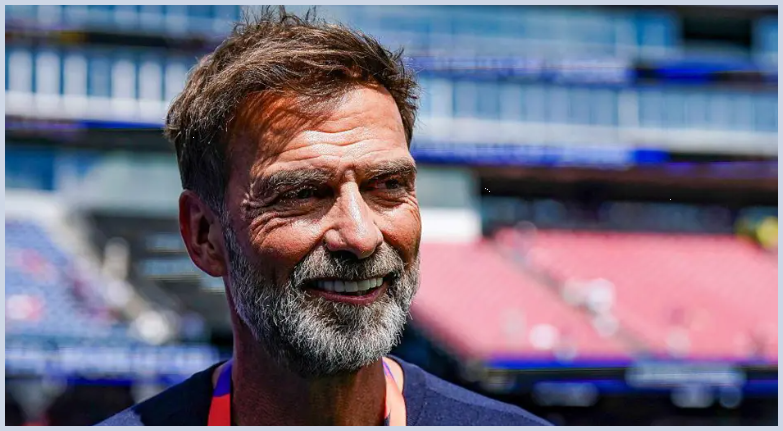
Jurgen Klopp's Germany Challenge: Can the Liverpool Legend Restore a Fallen Football Giant?
Few managers in modern football command the level of respect that Jurgen Klopp does. After transforming Liverpool into Premier League and UEFA Champions League winners, the charismatic German now faces arguably the biggest challenge of his coaching career, reviving a struggling Germany national team that has lost its identity on the international stage.
For many supporters, Klopp represents hope. For others, his appointment is simply a temporary fix for deeper structural issues within German football.
With a contract running until 2030, the former Liverpool and Borussia Dortmund manager now carries the responsibility of leading Germany into Euro 2028 and the 2030 FIFA World Cup, beginning with his first match against the Netherlands on September 24.
Germany Turn to Klopp After Another World Cup Disappointment
Germany's latest FIFA World Cup campaign ended in heartbreak after a surprise penalty shootout defeat to Paraguay in the Round of 32.
The disappointing exit prompted Julian Nagelsmann to step down as head coach, leaving the German Football Association (DFB) searching for a leader capable of rebuilding one of football's most decorated nations.
The DFB wasted little time.
Klopp quickly emerged as the federation's preferred choice, with officials convinced he possessed the leadership, personality and experience needed to restore Germany's competitive edge. DFB president Bernd Neuendorf described Klopp as the ideal appointment.
According to Neuendorf, the former Liverpool boss combines passion, credibility and an unmatched ability to inspire players and supporters alike. After weeks of discussions, Germany secured the signature they wanted most.
Why Jurgen Klopp Was the Obvious Choice
Klopp arrives with one of the most impressive coaching résumés in world football. During his spell at Borussia Dortmund, he won two Bundesliga titles while challenging Bayern Munich's domestic dominance.
His achievements at Liverpool elevated his status even further. Over nine unforgettable years at Anfield, he guided the Reds to the Premier League, Champions League, FA Cup, League Cup, UEFA Super Cup and FIFA Club World Cup.
More importantly, Klopp built teams renowned for their relentless intensity, resilience and unity. His famous "mentality monsters" philosophy transformed Liverpool into serial winners and earned him legendary status among supporters. Germany now hope he can create that same winning culture within the national team.
Klopp will not be working alone either. He has reunited with trusted assistants Pep Lijnders and Peter Krawietz, two coaches who played significant roles in Liverpool's success.
The trio now face the challenge of rebuilding confidence in a squad that has struggled to meet expectations for almost a decade.
Supporters Believe Klopp Can Inspire a New Era
Public opinion has largely welcomed Klopp's appointment. A poll conducted by respected German football magazine Kicker found that around 80 percent of readers believe he is the right man for the job.
Many observers feel Germany's biggest issue has not been talent but mentality. The national team has repeatedly been criticised for lacking passion, leadership and a strong connection with supporters.
Former Germany captain Stefan Effenberg believes Klopp's arrival could completely change the atmosphere surrounding the team. Speaking on German television, Effenberg said Klopp has the personality to create renewed optimism and reconnect the squad with its fanbase.
Borussia Dortmund chief executive Carsten Cramer also praised the appointment, suggesting Klopp represents many of the values currently missing not only in German football but in the country more broadly.
Not Everyone Is Convinced
Despite the widespread excitement, Klopp's appointment has not been universally celebrated.
His decision to become Red Bull's Head of Global Soccer in 2024 remains controversial among many German football supporters.
Red Bull's ownership model has long divided opinion in Germany because of concerns surrounding the country's traditional 50+1 ownership rule, which protects supporter influence within clubs.
Reports suggesting Klopp could continue working as a Red Bull ambassador while coaching Germany triggered fresh criticism. Former DFB president Theo Zwanziger described such an arrangement as unacceptable, arguing it could create conflicts of interest.
Supporters' group Unsere Kurve also questioned whether the German federation should maintain close ties with Red Bull through Klopp.
Some fans, particularly those connected to Borussia Dortmund, believe the former coach damaged his reputation by accepting the Red Bull role.
Critics argue that before presenting Klopp as German football's saviour, supporters should remember the controversy surrounding his career decisions in recent years.
Questions Surround the DFB's Decision
Others have questioned whether the DFB explored enough alternatives before appointing Klopp. Former Germany midfielder and 2014 World Cup winner Bastian Schweinsteiger admitted Klopp was probably the strongest available candidate.
However, he also wondered whether the federation had any genuine backup options. Schweinsteiger suggested Germany's problems extend far beyond the coaching position.
Replacing the manager alone, he argued, may only mask deeper issues affecting player development, coaching structures and the overall direction of German football.
Klopp Knows the Rebuild Goes Beyond the National Team
Interestingly, Klopp himself agrees with many of those concerns. He has repeatedly stated that Germany's struggles cannot be solved solely by appointing a new head coach. Instead, he believes meaningful reforms are needed across every level of German football, from youth academies to coaching education and long-term player development.
Speaking before taking charge, Klopp stressed that the national team's problems reflect broader challenges facing football in Germany.
He believes lasting success will only come through fundamental changes rather than short-term solutions. That honest assessment may be one of the reasons many believe he is the right person to lead the rebuild.
The Road to Euro 2028 Begins Now
Klopp's first competitive assignment arrives in September when Germany begins their UEFA Nations League campaign against long-time rivals the Netherlands.
While those matches will provide an early indication of progress, the true measure of success will come at Euro 2028, hosted by the United Kingdom and Ireland. The tournament could also provide an emotional moment for Klopp.
Although Liverpool's Anfield is not among the host venues, Germany could potentially play fixtures at Everton's new Hill Dickinson Stadium, bringing Klopp back to Merseyside for the first time since leaving Liverpool.
By then, football fans across Europe should have a clearer picture of whether one of the game's greatest managers has succeeded in restoring Germany to the summit of international football. For now, expectations remain enormous. Some see Jurgen Klopp as the leader capable of transforming German football once again.
Others believe even a manager of his calibre cannot solve years of decline alone. The coming years will reveal whether Klopp's appointment marks the beginning of a genuine revival or simply delays the need for much deeper reform.
💬 Comments (0)
No comments yet. Be the first!
Leave a Comment