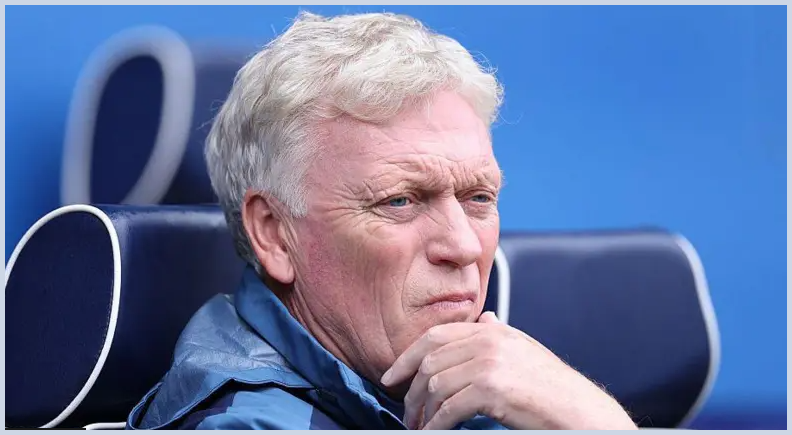
Can David Moyes Lead Everton Forward? Toffees Aim to Bounce Back After Painful End to Promising Season
For much of the 2025-26 Premier League season, Everton looked like genuine contenders for European qualification.
Inspired by standout performances from Jack Grealish, Kiernan Dewsbury-Hall, Thierno Barry, and Beto, the Toffees appeared to have turned a corner under David Moyes. Confidence was growing, and supporters dared to dream of a return to European football.
However, what began as a season full of promise ended in disappointment. A dramatic collapse during the final weeks saw Everton slide down the table, raising fresh questions about whether Moyes can guide the club to the next level.
A Promising Campaign Ends in Frustration
Everton's ambitions reached their peak after an emphatic 3-0 victory over Chelsea on 21 March. The win lifted the Merseyside club to eighth place, just three points behind the Champions League qualification spots with seven matches remaining. At that stage, optimism surrounded the club.
Instead of pushing for Europe, Everton suffered a dramatic downturn. They failed to win any of their remaining league fixtures, marking their longest winless run since Moyes returned for his second spell in charge in 2025.
A 2-2 draw at Brentford in April proved to be the turning point, as Everton's performances steadily declined. During the closing weeks of the campaign, only relegated Burnley and Wolverhampton Wanderers matched Everton's poor run of form, with all three clubs failing to record a victory over that period.
Progress Hidden Behind Another 13th-Place Finish
Although Everton finished 13th for the second consecutive season under Moyes, the circumstances surrounding each campaign were completely different.
When Moyes returned to Goodison Park 18 months earlier, Everton were battling relegation and sat just one point above the bottom three. By the end of that season, he had guided them safely clear, finishing 23 points above the relegation zone.
Last summer, Everton invested a club-record £97 million net spend in an effort to build on that momentum. Despite earning one more point than the previous season, they ended in the exact same league position, leaving many supporters wondering whether enough progress had truly been made.
Former Everton midfielder Leon Osman believes stability itself should not be underestimated.
After years dominated by financial issues, points deductions, and relegation battles, consistently finishing in mid-table represents meaningful improvement for the club.
Home Form Failed to Match Expectations
Everton's move to the modern Hill Dickinson Stadium was expected to usher in a new era. Instead, their home performances became one of the biggest disappointments of the season.
The Toffees averaged just 1.2 points per home game, the lowest return recorded by any Premier League club during its first season in a new stadium.
Ironically, Everton performed significantly better away from home, where their results ranked among the league's top seven. Osman believes several factors contributed to the inconsistency, including injuries and squad fatigue.
One of the biggest setbacks came when Jack Grealish suffered a stress fracture in January. His absence had a major impact. With Grealish in the side, Everton won 45 percent of their matches and averaged 1.6 points per game. Without him, that figure dropped dramatically to just 22 percent, with the team collecting only one point per match on average.
Transfer Strategy Still Taking Shape
While clubs like Brighton & Hove Albion and Bournemouth continue to earn praise for their smart recruitment models, Everton remain in the rebuilding phase. Years of poor transfer business under previous owner Farhad Moshiri left the club paying heavily for expensive signings who eventually departed without generating transfer income.
The arrival of the Friedkin Group brought renewed investment, with nine new players joining before last season. Some additions proved successful.
Grealish and Dewsbury-Hall made an immediate impact, while striker Thierno Barry impressed physically by winning more aerial duels than any other Premier League player during his debut campaign.
However, several younger signings are still developing.
Winger Tyler Dibling, signed from Southampton for £35 million, started only six league games, while left-back Adam Aznou is still waiting to make his Premier League debut.
Midfielder Merlin Rohl also endured a slow start before delivering encouraging performances during the final month of the season.
Transfer Decisions Could Shape Everton's Future
Everton's summer business may prove decisive. Reports suggest Jack Grealish is expected to return on another loan spell as he continues recovering from his foot injury, although his reported wages of around £200,000 per week remain a significant consideration.
Meanwhile, influential attacker Iliman Ndiaye has attracted interest from clubs in Saudi Arabia. Osman believes keeping Ndiaye should be a priority, unless Everton receive an offer large enough to strengthen multiple areas of the squad.
The club has already strengthened by signing Hayden Hackney from Middlesbrough and winger Tyrique George from Chelsea after his successful loan spell.
Everton are also being linked with experienced additions, including Alistair Johnston and Christian Norgaard, as Moyes seeks greater balance between youth and experience.
Young Players Must Take the Next Step
Despite recruiting several promising youngsters, Everton have yet to fully benefit from their investment. Players aged 21 or younger featured for just 1,088 Premier League minutes last season, one of the lowest totals in the division.
Moyes also relied on the smallest squad in the league, using only 22 players throughout the campaign while making fewer substitutions than any other Premier League manager.
With veterans Seamus Coleman and Idrissa Gueye departing and James Garner recovering from groin surgery, opportunities could open for younger players. However, Osman insists they must prove they are ready to earn Moyes' trust.
If talents like Tyler Dibling, Tyrique George, and others continue to develop, Everton's squad depth could improve significantly.
A Crucial Season Awaits Moyes
David Moyes enters the final year of his current contract facing one of the biggest challenges of his second spell at Everton. The club has moved beyond relegation fears, but expectations have also risen.
Supporters now want genuine progress, stronger home performances, smarter recruitment, and a realistic push toward European qualification.
Whether Everton can finally bridge that gap may depend on how quickly their younger players mature, how effectively new signings settle, and whether Moyes can rediscover the consistency that made the Toffees one of the Premier League's surprise packages for much of last season.

💬 Comments (0)
No comments yet. Be the first!
Leave a Comment